What Non-Smokers Should Know About Lung Cancer Surgery
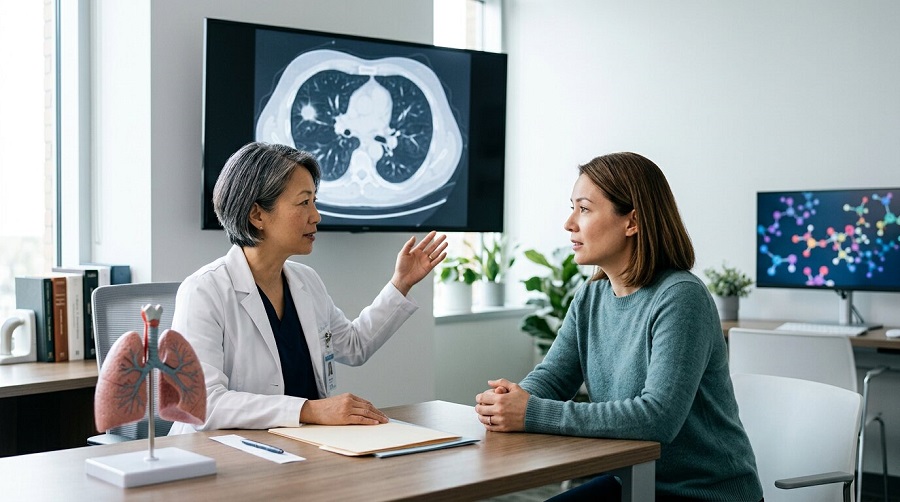
If you’ve been diagnosed with lung cancer and you’ve never smoked, you’re likely wondering why this happened and what surgery really involves for someone like you. Your cancer often behaves differently, sits in different parts of the lung, and may respond to specific drugs tied to its genetics. Understanding how that changes your options, risks, and recovery can help you make decisions that truly fit your life, but first, you need to know…
How Is Lung Cancer Different for Non-Smokers?
When lung cancer develops in people who've never smoked, it often differs in several ways from the types most strongly linked to tobacco use.
Non-smokers are more likely to develop adenocarcinoma, a form of non–small cell lung cancer that usually begins in the outer regions of the lung rather than the central airways. On imaging, these tumors can sometimes spread in a subtle, diffuse pattern that may be more difficult to detect at an early stage.
In many cases, the cancer appears to grow more slowly, and people without a smoking history may tolerate certain treatments better, in part because they often have fewer other smoking-related health problems. Nonetheless, the risk of recurrence remains significant.
Tumors in never-smokers are also more likely to carry specific genetic alterations, such as changes in the EGFR, ALK, or ROS1 genes. Because of this, clinicians commonly recommend comprehensive molecular profiling of the tumor to identify potential targets for precision therapies.
Are You a Candidate for Lung Cancer Surgery as a Non-Smoker?
Although lung cancer in people who've never smoked can differ biologically from smoking-related lung cancer, surgery is generally considered only when the disease is detected at an earlier stage and when a person is medically fit to undergo an operation.
You may be a candidate if imaging studies and lymph node assessment indicate stage I, stage II, or some cases of stage IIIA disease that appear resectable. Before recommending surgery, your care team will evaluate lung function, heart health, and overall physical status to determine whether you're likely to tolerate anesthesia and recovery. As a non-smoker, you may have better baseline lung function, but this varies from person to person.
Decisions about surgery are usually made by a multidisciplinary team, often including thoracic surgeons, medical oncologists, radiation oncologists, pulmonologists, and radiologists, at a center experienced in lung cancer care. They'll review your imaging, biopsy results, and molecular testing, and may also discuss whether any clinical trials are appropriate in your situation.
Types of Lung Cancer Surgery and What Each One Removes
Understanding the main types of lung cancer surgery can clarify what tissue is removed and the reasons for each approach.
- Lobectomy removes one entire lobe of the lung (the right lung has three lobes, the left has two). It's the standard operation for many early-stage lung cancers because it removes the tumor along with a margin of surrounding normal tissue and associated lymphatic drainage.
- Segmentectomy removes one anatomical segment within a lobe. It's generally considered when tumors are very small or when preserving lung function is important, such as in people with limited respiratory reserve. It aims to balance adequate cancer removal with conservation of healthy lung.
- Wedge resection removes a small, wedge-shaped portion of lung that includes the tumor and a rim of normal tissue. It's often used for small, peripheral tumors or when a patient can't tolerate a larger resection. It may carry a higher risk of local recurrence compared with lobectomy for some cancers.
- Pneumonectomy involves removal of an entire lung. This is usually reserved for large, centrally located tumors or those involving major blood vessels or airways where more limited surgery wouldn't achieve complete removal.
It has greater impact on breathing and overall function, so careful assessment of lung and heart function is required.
- Sleeve lobectomy removes a lobe of the lung along with a segment of the main bronchus (airway) that contains tumor. The remaining ends of the bronchus are then reconnected. This procedure can allow complete tumor removal while preserving more lung tissue compared with a pneumonectomy, and is often considered when the tumor involves the airway but not the entire lung.
In all cases, surgeons typically also sample or remove nearby lymph nodes to assess cancer spread and guide further treatment.
How Your Surgeon Chooses the Right Operation for You
Choosing the appropriate lung operation is an individualized decision based on the specific characteristics of your cancer and your overall health. It isn't a standard approach applied in the same way to everyone. Your surgeon considers factors such as tumor size, location, and the extent of lung involvement.
Small tumors (2 cm or less) located in the outer portions of the lung may be suitable for a wedge resection or segmentectomy. Larger tumors, or those closer to the central structures of the chest, more often require a lobectomy or bilobectomy, while a pneumonectomy is used less frequently and only when necessary.
In addition, your surgeon evaluates the cancer stage, lymph node involvement, lung function, heart health, and features of the tumor such as its growth pattern and any relevant genetic markers. Based on these factors, they select the surgical approach, open surgery, video‑assisted thoracoscopic surgery (VATS), or robotic‑assisted surgery, with the goals of completely removing the cancer with clear margins and preserving as much lung function as is safely possible.
Tests and Preparation Before Lung Cancer Surgery
Before lung cancer surgery, the healthcare team performs several tests and planning steps to assess safety and likely effectiveness. Lung function tests such as spirometry and diffusing capacity, along with cardiopulmonary exercise testing, help determine whether a person can safely undergo procedures like lobectomy, segmentectomy, or smaller resections.
Imaging studies, including high‑resolution chest CT, PET scans, and often brain MRI, are used to stage the cancer and evaluate whether it can be fully removed. Endobronchial ultrasound (EBUS) or CT‑guided biopsy may be used to sample lymph nodes or peripheral lung nodules to confirm the diagnosis and extent of disease.
In addition, the team reviews any available molecular profiling results, which can influence overall treatment planning. Patients receive specific instructions regarding medications, fasting before surgery, smoking cessation, and arranging support at home for the recovery period.
Recovery and Rehab After Lung Cancer Surgery for Non-Smokers
Recovering from lung cancer surgery as a non‑smoker is often associated with better baseline lung function and a lower risk of some complications compared with people who smoke, although outcomes still vary by age, overall health, and the extent of surgery.
After the operation, it's common to wake up with chest tubes to drain air and fluid from around the lung; these are typically removed after several days once drainage decreases and the lung has re‑expanded adequately. Hospital stays are generally shorter after minimally invasive procedures such as video‑assisted thoracoscopic surgery (VATS) or robotic-assisted surgery than after an open thoracotomy, but the exact duration depends on individual recovery and any postoperative issues.
Respiratory care after surgery usually includes breathing exercises, use of an incentive spirometer, and chest physiotherapy to help reduce the risk of pneumonia and improve lung expansion.
Rehabilitation often incorporates gradual walking, progressive aerobic conditioning, and basic strength exercises, and some patients may be referred to formal pulmonary rehabilitation programs, especially if lung function is reduced or if they've other respiratory conditions.
Many individuals can return to light daily activities within approximately 2–6 weeks and increase to more demanding tasks over 6–12 weeks, but these timelines are approximate and should be adjusted based on medical advice and individual progress.
Genetic Testing, Targeted Therapy, and Immunotherapy Around Surgery
As your recovery progresses and you begin planning longer term, your care team may focus on the tumor’s specific biological features through genetic and molecular testing. Comprehensive tumor profiling evaluates the cancer for somatic driver mutations, such as EGFR, ALK, and ROS1, which are more frequently found in people with little or no smoking history, although they can occur in anyone.
If testing identifies an actionable mutation, an oral targeted therapy may be recommended after surgery (adjuvant therapy) to help reduce the risk of the cancer returning. In some situations, targeted therapies or immunotherapy are given before surgery (neoadjuvant therapy) to help shrink the tumor and potentially make the operation more effective.
The decision to use immunotherapy is often guided by PD‑L1 expression levels on tumor cells, as well as other molecular findings and clinical factors. Some studies suggest that people with a history of smoking may derive greater benefit from certain immunotherapies, but individual responses vary. Clinical trials may offer access to additional treatment strategies or combinations that are being studied, and your team can help determine whether any trials are appropriate in your situation.
Conclusion
You now know lung cancer in non-smokers often behaves differently and may respond to targeted treatments. By understanding your tumor type, surgical options, and the value of genetic testing, you can take an active role in decisions. Ask questions, lean on your care team, and consider clinical trials. With careful planning, modern surgery and personalized therapies give you a real chance to treat the cancer effectively and protect your long‑term lung health.